Girilang
Five ways to reduce turnover in a shared house
Turnover is the quiet drain on a shared house’s margin, and most of it comes from things that are cheap to fix.
- All states
- 6 min read
- Published:
- 30 April 2026
- Last updated:
- 6 October 2026
Every time a room turns over you lose rent, spend hours on applications, and risk a worse tenant than the one who left. Unlike most costs in property, turnover is largely within your control.
Three weeks empty
- Typical amount
- $750
Advertising and listing
- Typical amount
- $50 to $150
Cleaning and small repairs between tenants
- Typical amount
- $150 to $300
Your time on viewings, applications and paperwork
- Typical amount
- Two weekends
Total
- Typical amount
- Around $1,000, before your time
| Cost | Typical amount |
|---|---|
| Three weeks empty | $750 |
| Advertising and listing | $50 to $150 |
| Cleaning and small repairs between tenants | $150 to $300 |
| Your time on viewings, applications and paperwork | Two weekends |
| Total | Around $1,000, before your time |
Set that against the small concession that would have kept somebody, and the concession looks cheap.
1. Fix things quickly
A repair that drags is one of the quickest ways to lose a good tenant, and the silence usually does more harm than the fault. Answer the same day, even when the fix will take longer: say what happens next and when the tradesperson is booked. People stay where they feel looked after.
2. Make rent a non-event
Agree once, in writing, how rent is paid: the amount, the day, the account and the reference to use. When paying rent generates no correspondence, the tenancy builds up none of the small resentments people leave over. If a payment is late, ask once, early and plainly.
3. Get the household mix right
Before somebody moves in, talk them through how the house runs: the shared spaces, quiet hours, guests and cleaning. Keep it to how they will live in the house, not who they are, because discrimination law still applies, as the guide to reading a rental application sets out.
One difficult housemate can set off a chain of departures. Acting early costs a conversation, and waiting can cost three rooms.
4. Reward the people who stay
A modest below-market renewal, a fresh coat of paint, or asking what would make the room better each costs a fraction of a vacancy. Few landlords do any of them, so tenants notice when one does.
5. Never lose track of anything
Write down every repair request, payment arrangement and promise with the date it was made, and look through the open ones each week. A tenant who had to ask twice remembers it at renewal, and a quiet house is the kind people stay in.
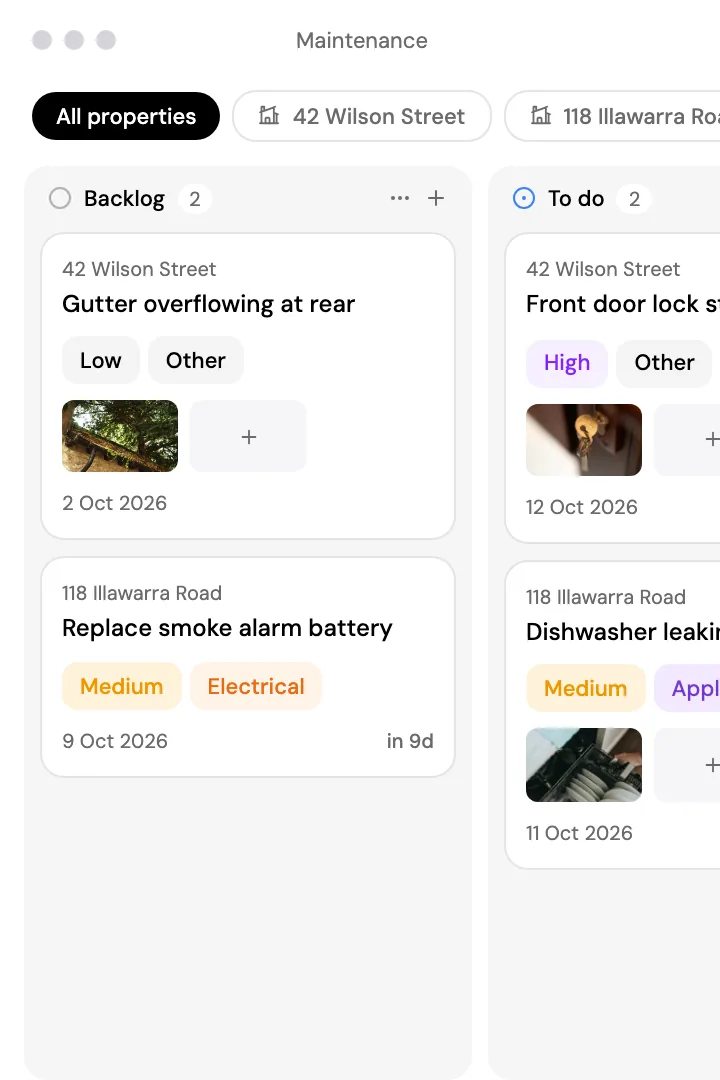
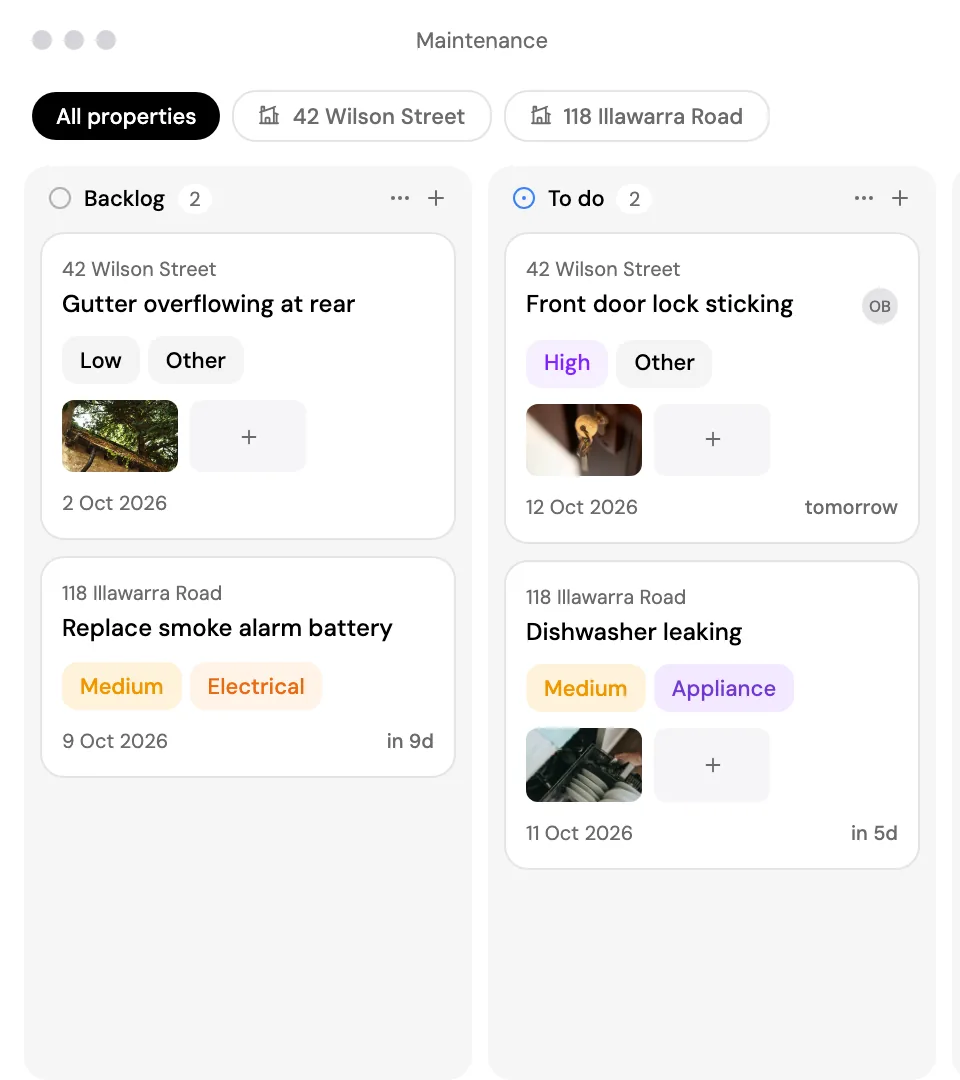
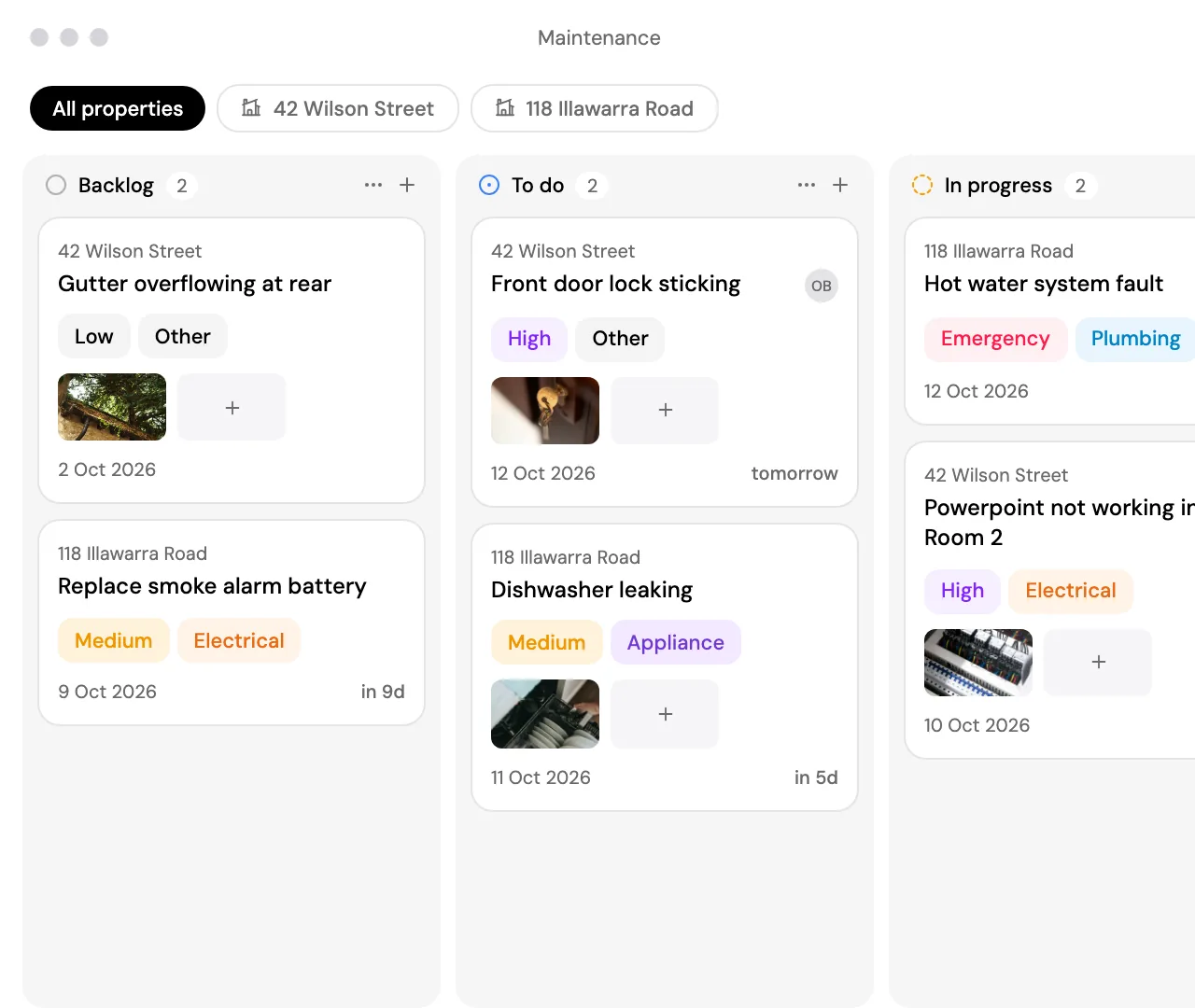
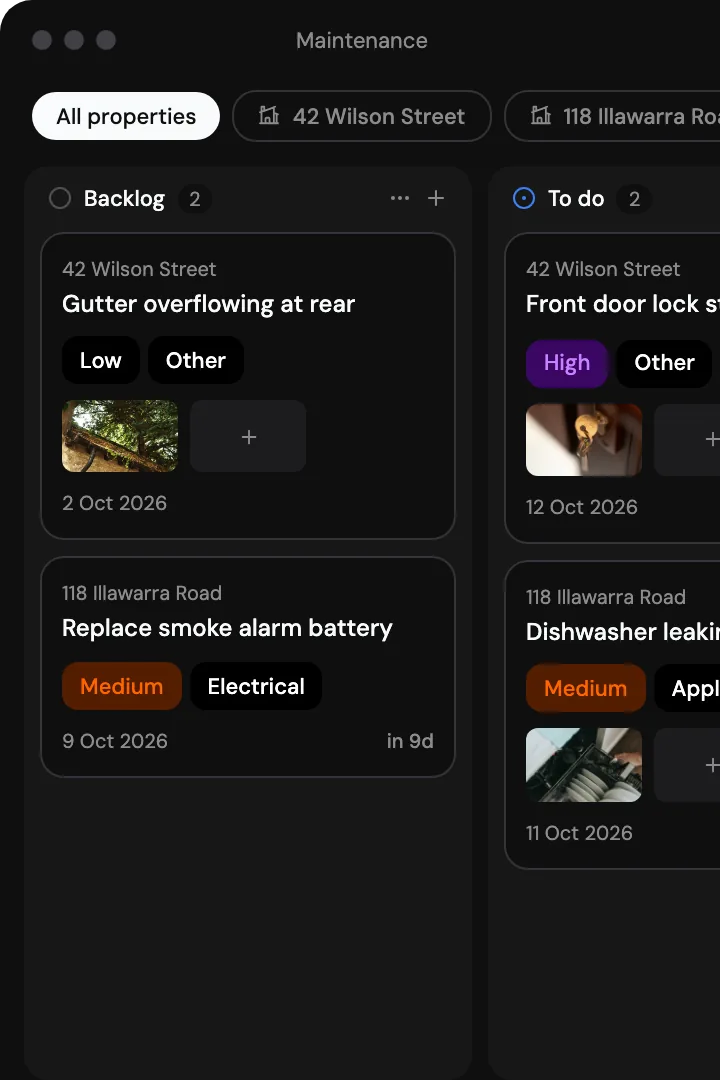
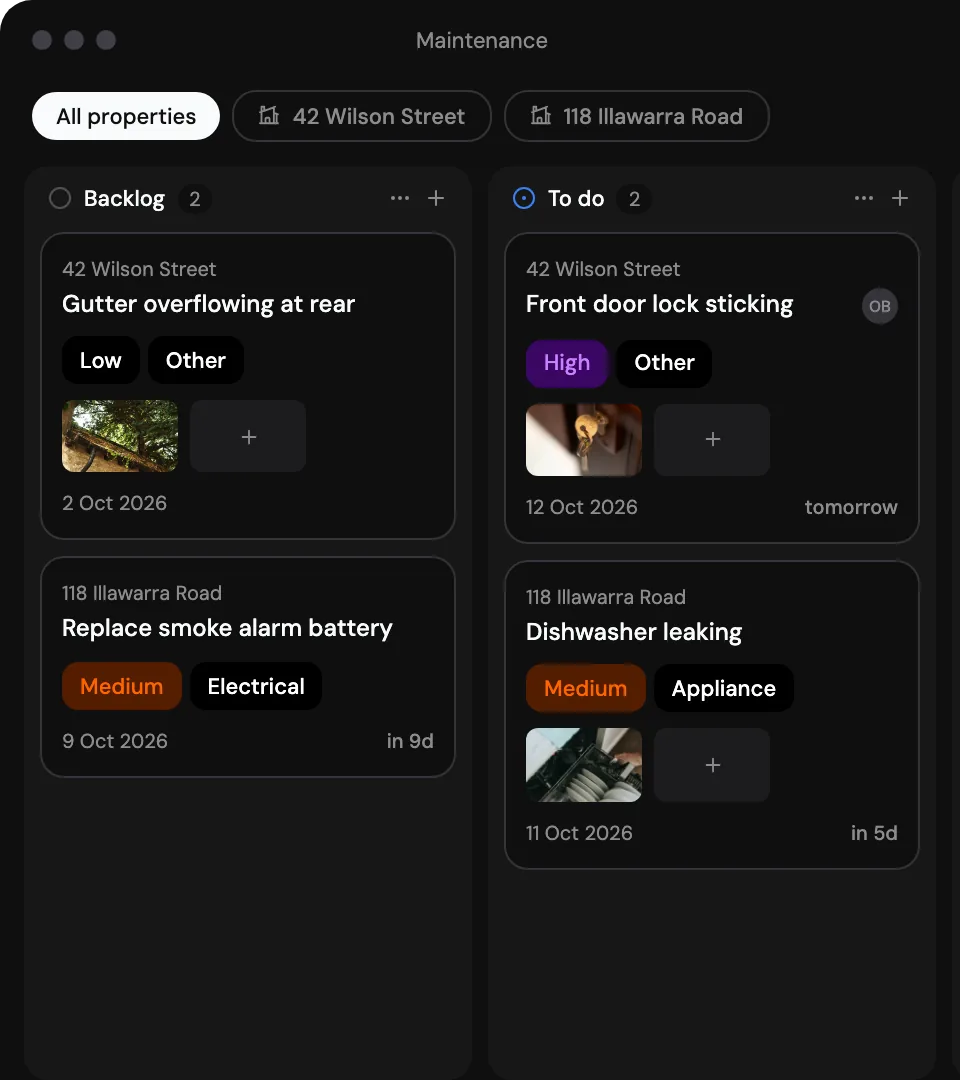
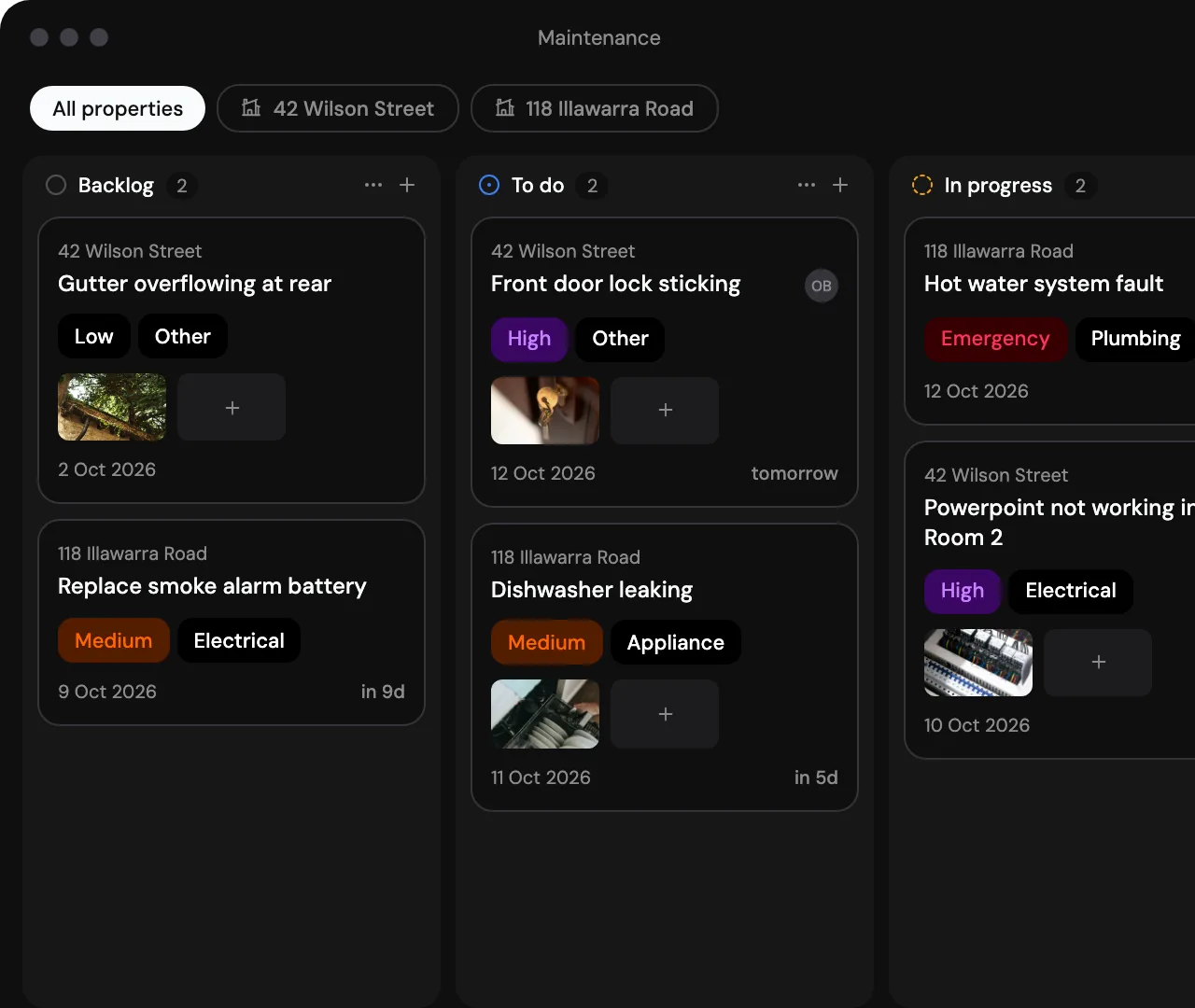
Repairs that never go quiet
Log every repair with photos on one maintenance board, from reported to done, with the tradesperson and due date on each job. On iPhone, file one straight from Photos with the share sheet, or ask Siri.