Girilang
Condition reports: twenty minutes that decide the bond
The ingoing report is the only document in a tenancy written before anyone has a reason to disagree. That is what makes it worth doing slowly.
- NSW
- 7 min read
- Published:
- 24 June 2026
- Last updated:
- 6 October 2026
New South Wales requires a condition report at the start of every residential tenancy and gives the tenant a chance to disagree with it. Most landlords treat it as an errand, yet those twenty minutes carry more weight in a bond dispute than anything else in the file.
The ingoing report is the only document written before anybody has a reason to want a particular answer. Everything produced later, the outgoing report, the photos, the emails, is written by someone who now cares how it reads. Tribunal members know this, which is why the ingoing report counts for so much more than the time it takes.
What NSW requires, and when
Complete the ingoing report
- Who
- Landlord or agent
- When
- Before the tenant moves in
Give the tenant their copies
- Who
- Landlord or agent
- When
- Before the tenant moves in, on paper or electronically
Add comments where they disagree, sign and return
- Who
- Tenant
- When
- Within seven days of moving in
Keep the returned report
- Who
- Landlord
- When
- For the life of the tenancy and well after it
Complete the outgoing report
- Who
- Landlord, ideally with the tenant
- When
- Promptly after the keys come back
| Step | Who | When |
|---|---|---|
| Complete the ingoing report | Landlord or agent | Before the tenant moves in |
| Give the tenant their copies | Landlord or agent | Before the tenant moves in, on paper or electronically |
| Add comments where they disagree, sign and return | Tenant | Within seven days of moving in |
| Keep the returned report | Landlord | For the life of the tenancy and well after it |
| Complete the outgoing report | Landlord, ideally with the tenant | Promptly after the keys come back |
A report the tenant has read and annotated is worth more than one they never returned. Chase it in the first week, while the tenant still remembers what the oven looked like on the day they arrived.
The room-by-room method
Work in a fixed order and keep to it. A consistent order is what lets you compare the ingoing and outgoing reports line by line later: the same rooms, the same sequence, the same items.
- 1 Take one wide photograph from the doorway. It is the shot that proves which room the close-ups belong to.
- 2 Work clockwise: walls, windows and coverings, floor, ceiling, fixtures, power points, doors and their hardware.
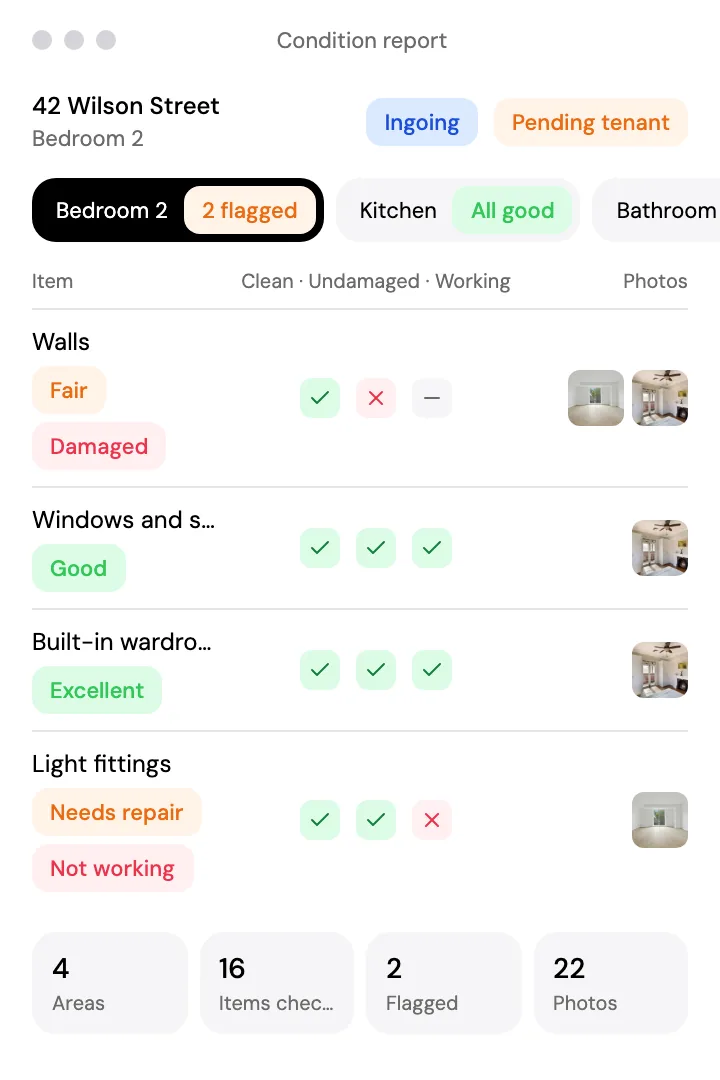
- 3 Photograph every existing mark, however small, and describe it in words too: “scuff, 10 cm, east wall behind door”.
- 4 Record what works as well as what is broken: taps, locks, smoke alarms, the oven, the exhaust fan.
- 5 Note the meter readings and the number of keys, remotes and fobs handed over.
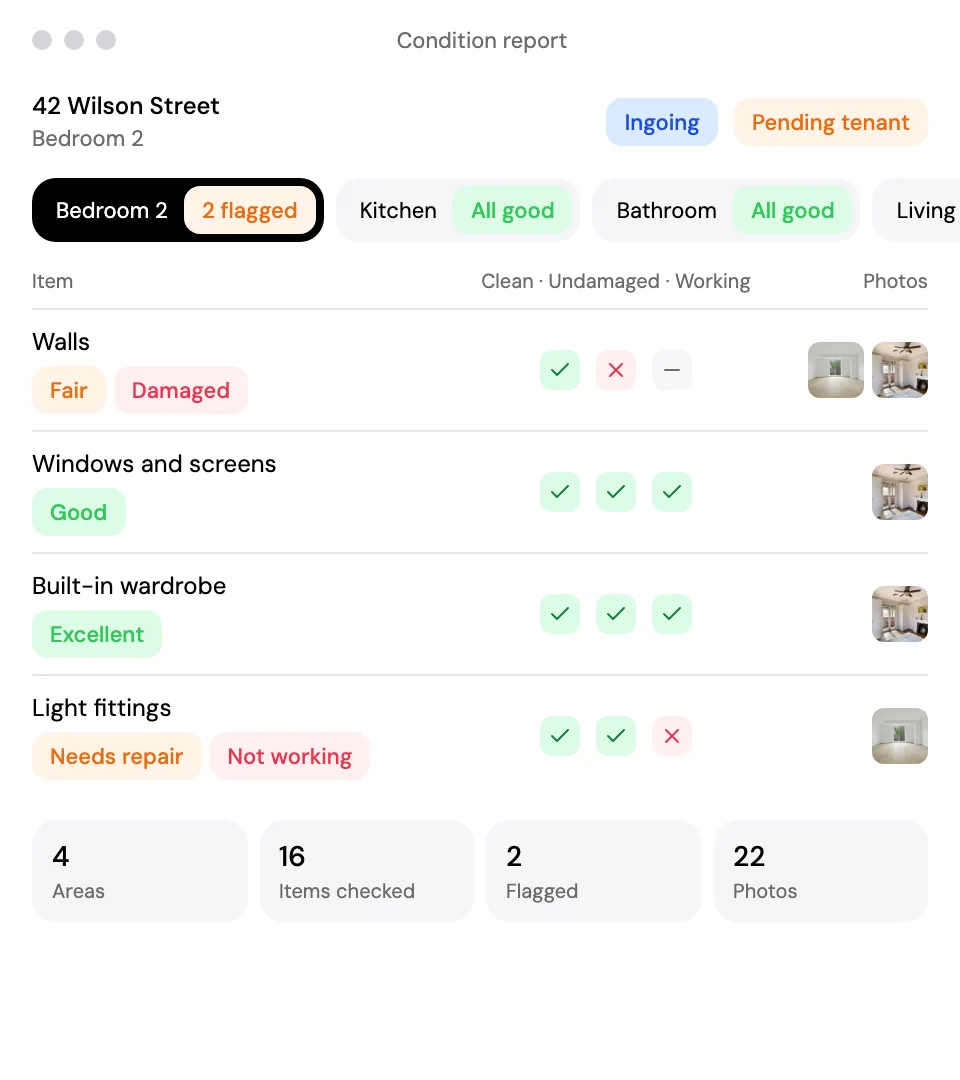
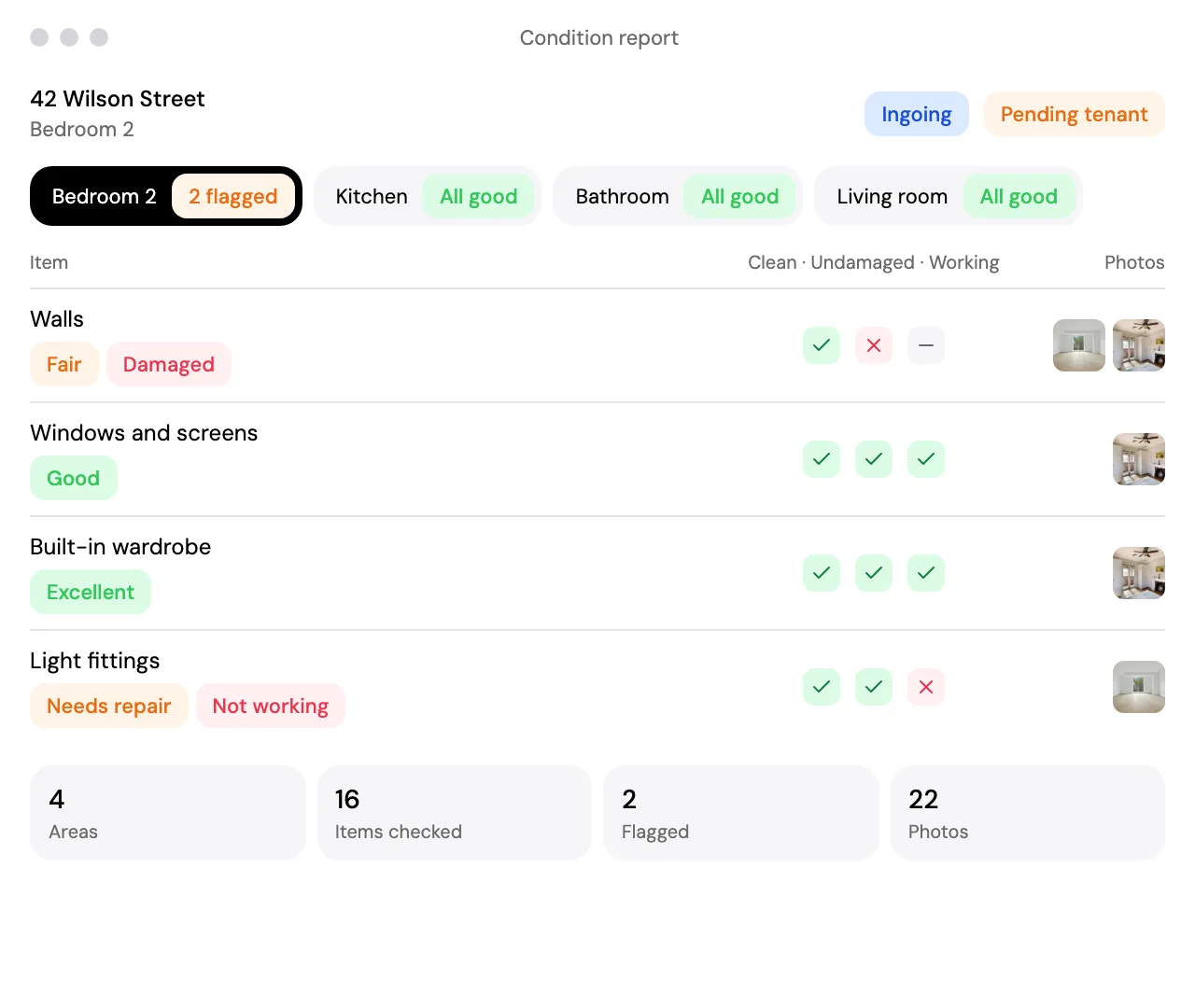
Fair wear and tear, or damage?
The distinction that decides most bond claims is easy to state and hard to apply. Fair wear and tear is the deterioration ordinary living causes over time, without anybody doing anything wrong. Damage is the result of an event, an accident or neglect.
Carpet worn thin along the hallway after four years
- Damage
- A burn, or a wine stain
Paint faded by sunlight
- Damage
- A hole left by a wall bracket
A perished tap washer
- Damage
- A cracked basin
Grout darkening in the shower
- Damage
- A broken window
| Fair wear and tear | Damage |
|---|---|
| Carpet worn thin along the hallway after four years | A burn, or a wine stain |
| Paint faded by sunlight | A hole left by a wall bracket |
| A perished tap washer | A cracked basin |
| Grout darkening in the shower | A broken window |
Age matters as much as the mark. You cannot charge a departing tenant for a new carpet when the old one was already near the end of its life. The tribunal apportions, and it apportions against whatever evidence exists about the condition and age of the thing at the start. Mould from an unreported leak may be neither wear nor damage: it may be a repair you owed.
A bond is security against loss. The claims that fail are the ones that would have left the property better than it started.
The outgoing report
Do the outgoing report with the ingoing report open beside you, in the same order, using the same words, because the comparison is the argument. Writing a fresh description of the property at the end of a tenancy throws away most of the value of the exercise. Photos from each routine inspection help too, since they show roughly when a mark first appeared.
Do it promptly after the keys come back and give the tenant a copy. If you and the tenant cannot agree on the bond, either of you can apply to the NSW Civil and Administrative Tribunal, and a claim raised weeks later against a property since cleaned, repaired or re-let is very hard to sustain, however right you are.
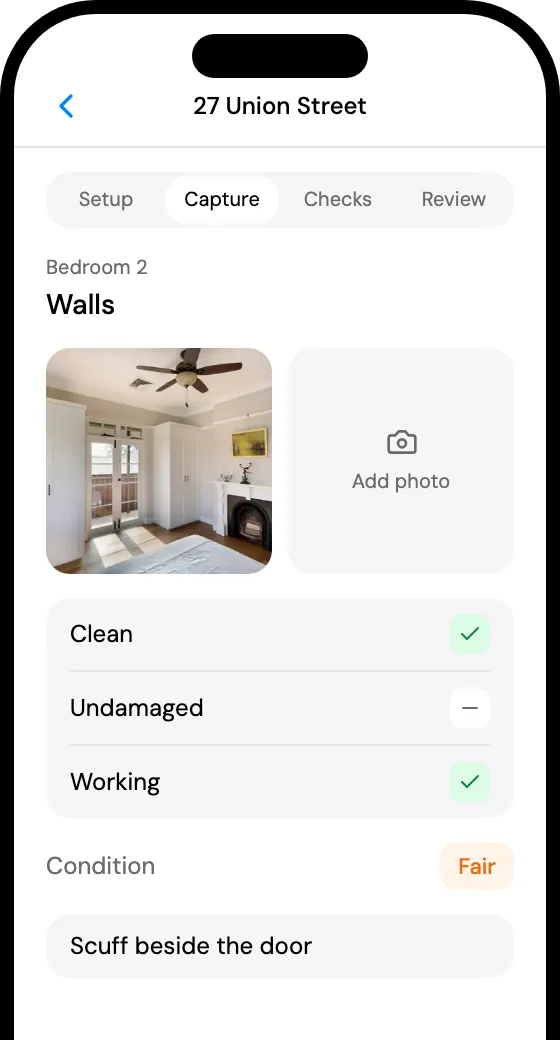
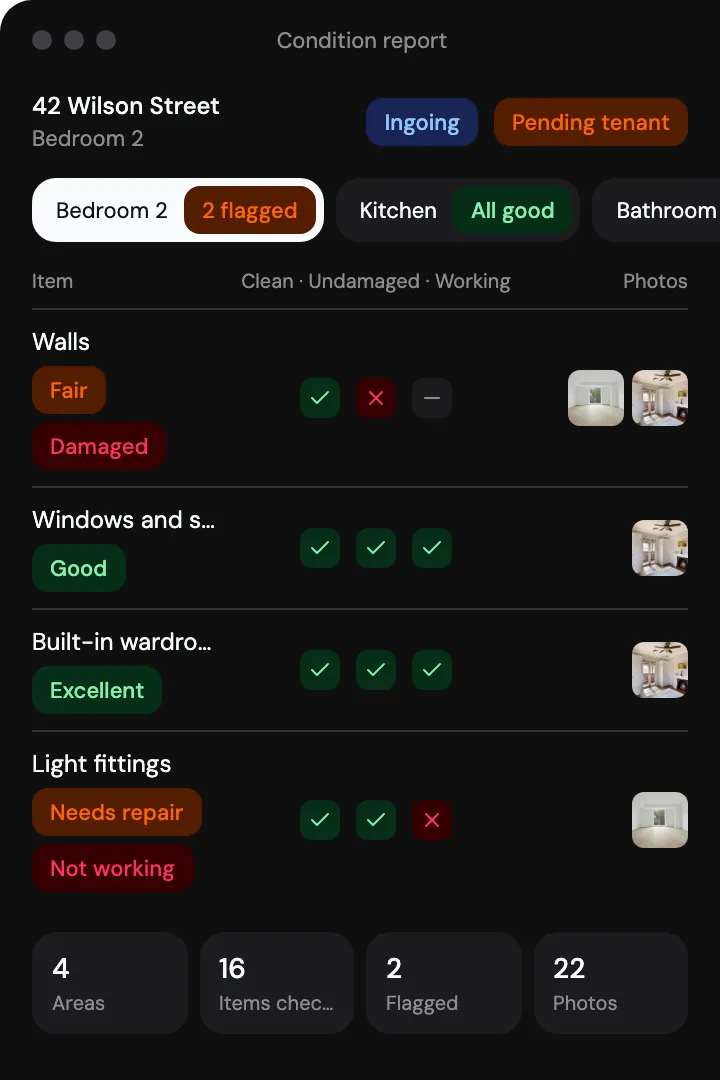
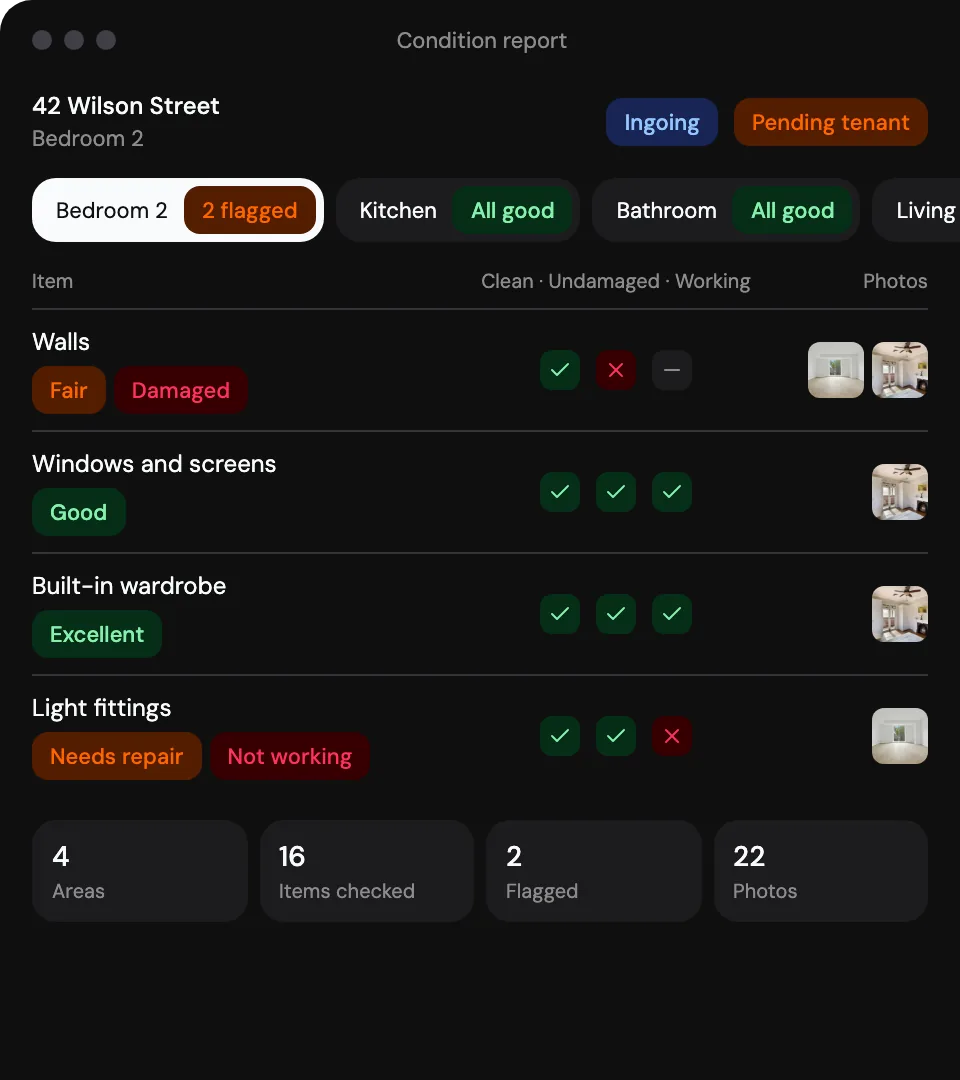
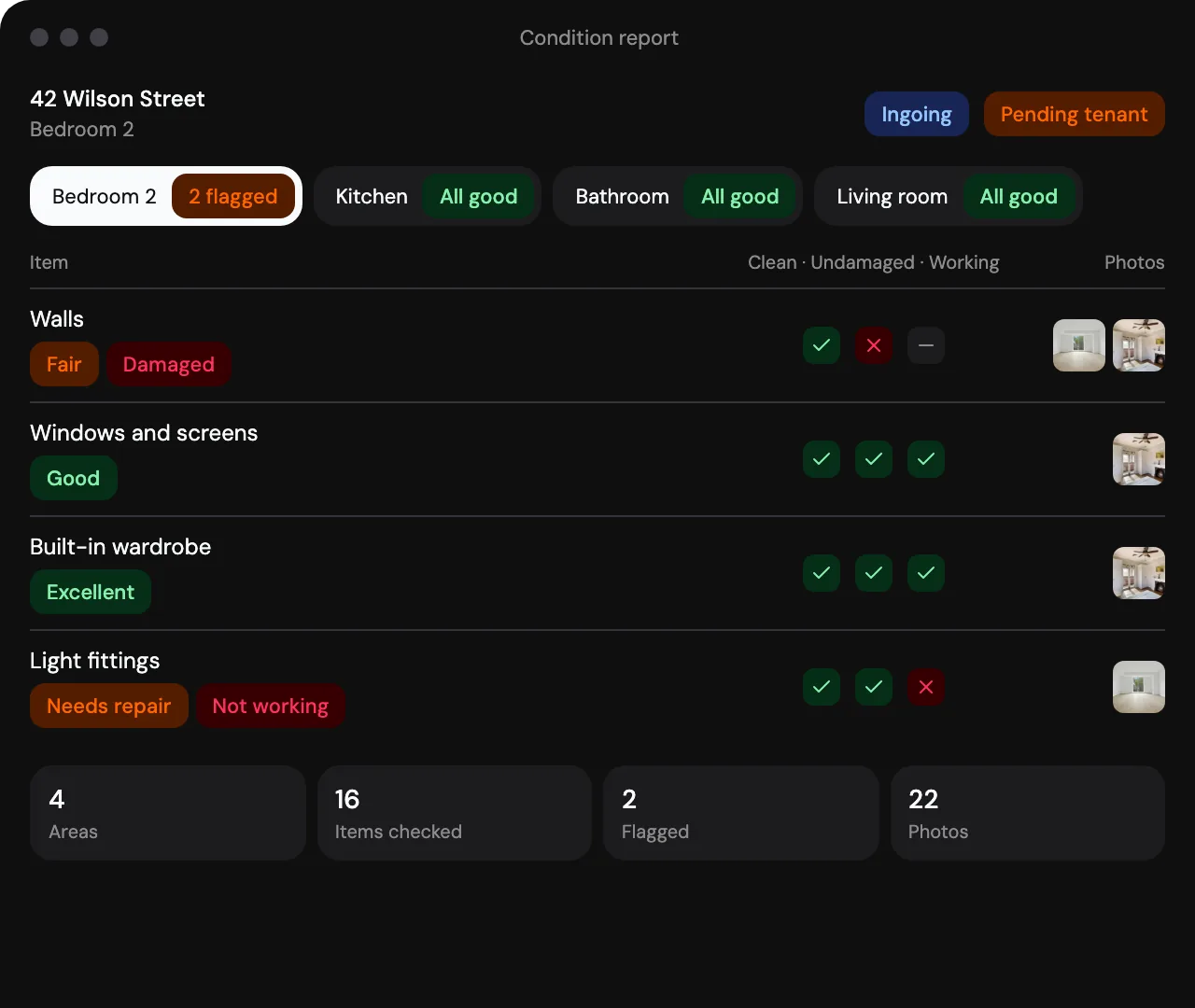
Condition reports, room by room, on your phone
Walk through with the iPhone or iPad app and capture every room and common area in photos and video, or write the report on the web. Attach it to a lease you send through Girilang and the tenant responds to it as they sign.